
War’s Moral Contradictions
Pamela's WarThis flow traces how the narrative moves from patriotic certainty toward more complicated judgments about enemies, civilians, and victory.
increasing Bearing strength in each event
 decreasing
Bearing strength in each eventdecreasingThe Enemy Image

The Enemy Image
Inherited Hatred
Sidney Wheeler’s World War I experiences make Germany synonymous with slaughter. The declaration of World War II revives a hatred that has never healed.
Domestic Readiness
His revolver plan shows how military memory transforms the enemy into a threat to the family’s moral and physical survival.
Patriotism begins in fear and inherited trauma.
Enemy Civilians
Enemy Civilians
Collective Suspicion
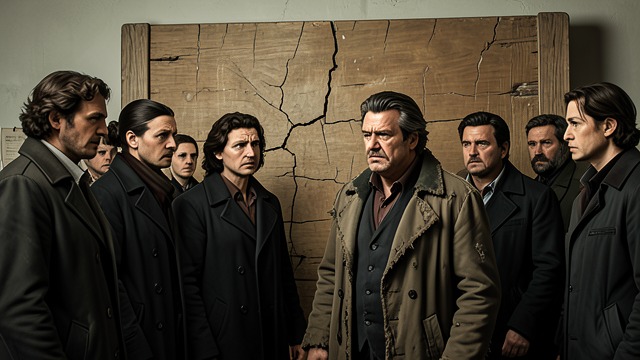
German residents near Clent are arrested amid rumors of signals, transmitters, and invasion. Their nationality becomes evidence.
Retrospective Doubt
Pamela later acknowledges that some may have been innocent refugees or Jews who hated Adolf Hitler. Her memory contains both the crowd’s wartime certainty and later moral discomfort.
The enemy category proves larger than individual guilt.
Italian Persecution

Italian Persecution
Coffee Shop Destroyed
The Italian shopkeeper’s windows are smashed because the town no longer wants Italians, despite enjoying his ice cream.
Internment Follows
He is imprisoned with other Italians once Italy becomes an enemy. A familiar civilian becomes suspect through nationality alone.
War turns ordinary prejudice into state policy.
Racial Ideology Exposed
Racial Ideology Exposed
Camps Revealed
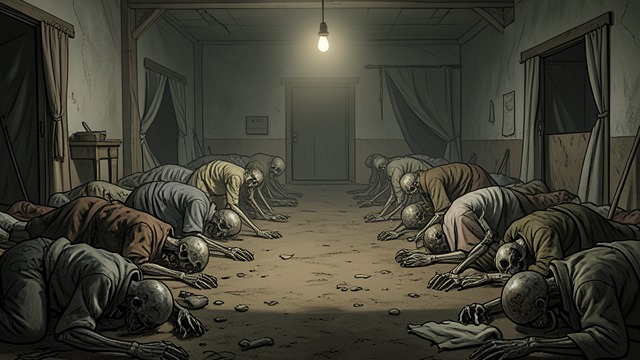
Reports from Bergen-Belsen describe starvation, corpses, and systematic murder. Richard Dimbleby broadcasts evidence of what Nazi rule has done.
Ideology Made Material
The Final Solution appears not as abstract doctrine but as organized suffering inflicted on bodies. The revelations transform hatred of Hitler into knowledge of a civilization’s crimes.
Victory must answer not only invasion but extermination.
Uneasy Victory
Uneasy Victory
Defeat Celebrated
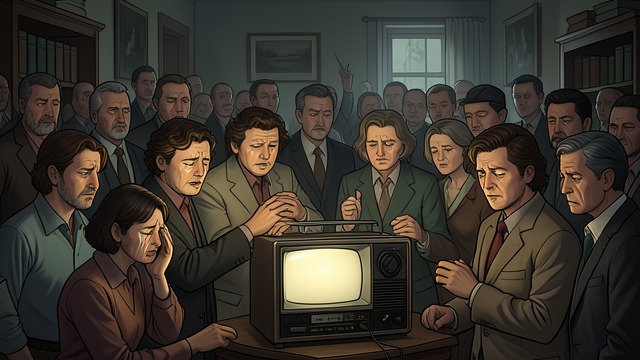
The deaths of Adolf Hitler and the declarations of victory end the immediate military struggle. Families celebrate, but the cost is everywhere.
Moral Burden
The atomic bombings, concentration camps, and destroyed homes prevent simple triumph. Victory ends the enemy’s power without restoring the dead.
Peace inherits the ethical weight of the methods used to achieve it.
September 1939
early wartime internment
after Italy enters the war
spring 1945
May to August 1945
